
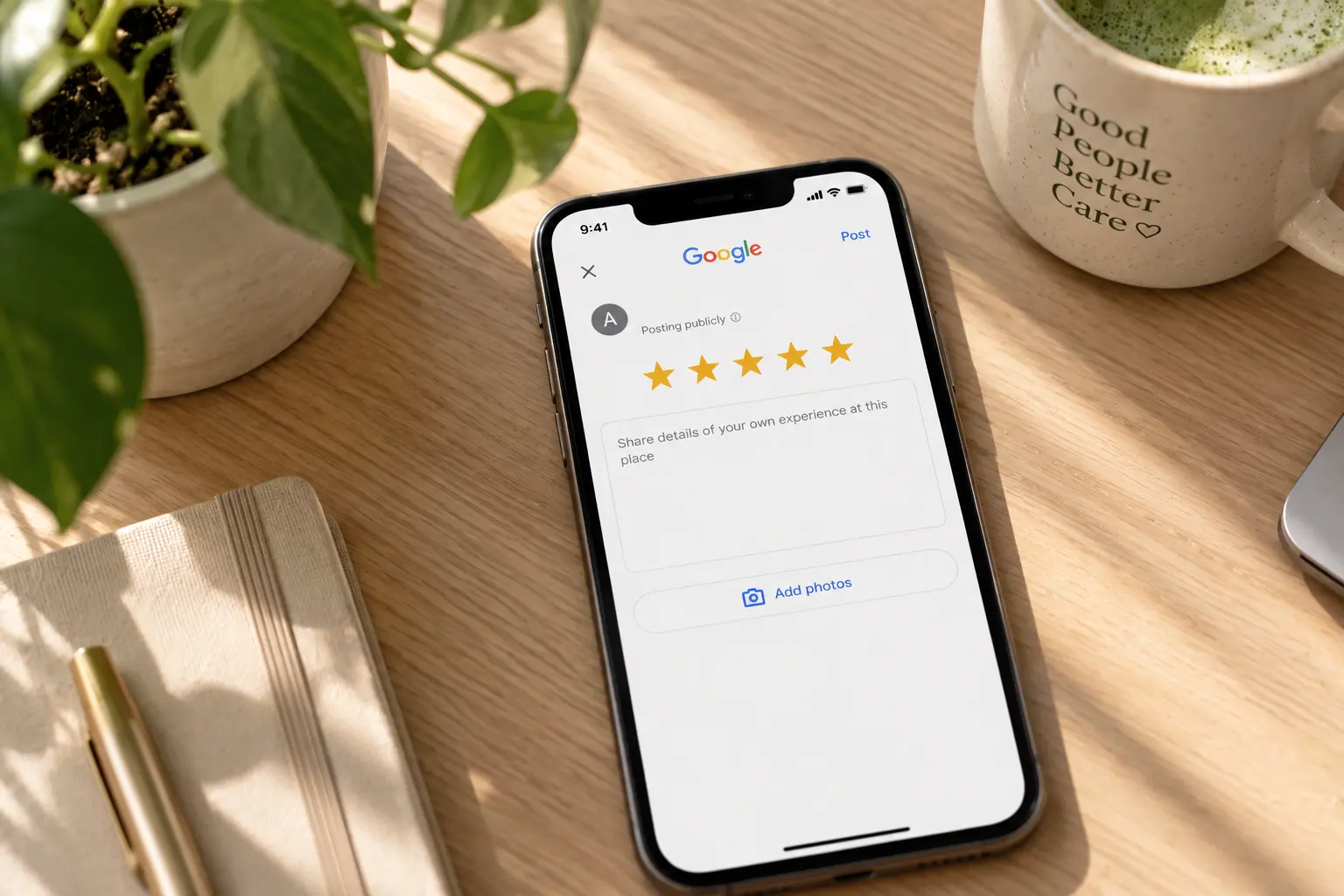
Most treatment centers sit on an untapped review engine and don't realize it. Your alumni are already in your program, already engaged with your brand, and already willing to advocate for what you built. The problem isn't motivation. The problem is timing, delivery, and compliance.
Google's local search algorithm weights review volume and recency. If your center has fewer than 50 reviews or hasn't received a new one in six weeks, you're losing ground to competitors who have systemized the ask. The FTC's 2024 rule banning fake or incentivized reviews means the old playbook of gift cards and raffle entries is now a liability. What replaces it is a compliant, automated strategy that triggers review requests at the exact moment alumni are most likely to leave a genuine, enthusiastic response.
That moment is a milestone. And if you're running an alumni app, you already know when it happens.
Why Google Reviews Matter More Than Ever for Treatment Centers
Search visibility for addiction treatment and behavioral health is intensely local. When someone searches for a program near them, Google surfaces the results with the most reviews, the most recent activity, and the strongest star ratings first. A center with 200 reviews and a 4.8 rating will consistently out-rank a center with 30 reviews and a 4.6, even if the latter is a better clinical program.
Reviews also function as social proof for a high-stakes decision. Families researching programs for a loved one are reading every word. A detailed, specific review from a former client carries more weight than any paid ad you're running.
The compliance dimension is real. SAMHSA's guidelines on privacy in substance use treatment establish that you cannot identify a client as having received treatment without their consent. That means your review strategy must be built on voluntary, unincentivized requests, delivered in a channel the client already uses, with clear language that they are not obligated to disclose any details about their treatment. A well-designed alumni app gives you exactly that infrastructure.
The Problem With Manual Review Requests
Most programs that try to collect reviews do it inconsistently. A staff member mentions it at the end of a call. Someone tapes a QR code to the wall in a meeting room. A discharge coordinator adds "please leave us a review" to a goodbye email that already contains twelve other items.
The result is a trickle of reviews, mostly from clients who were going to leave one anyway. The ask is disconnected from any emotional high point in the client's experience. It feels transactional because it is.
Alumni engagement research consistently shows that connection and response rates spike around meaningful milestones: 30 days, 60 days, 90 days, six months, one year. Those are the moments when your alumni feel the most pride in what they've accomplished and the most gratitude toward the program that supported them. That's when the review request lands with real weight.
Manual outreach can't reliably hit those windows at scale. An automated push notification inside a branded alumni app can.
How to Build a Compliant Review Collection Strategy Inside Your Alumni App
The mechanics are straightforward when the infrastructure is in place. Here's how treatment centers are actually doing it.
Trigger Review Requests From Milestone Events
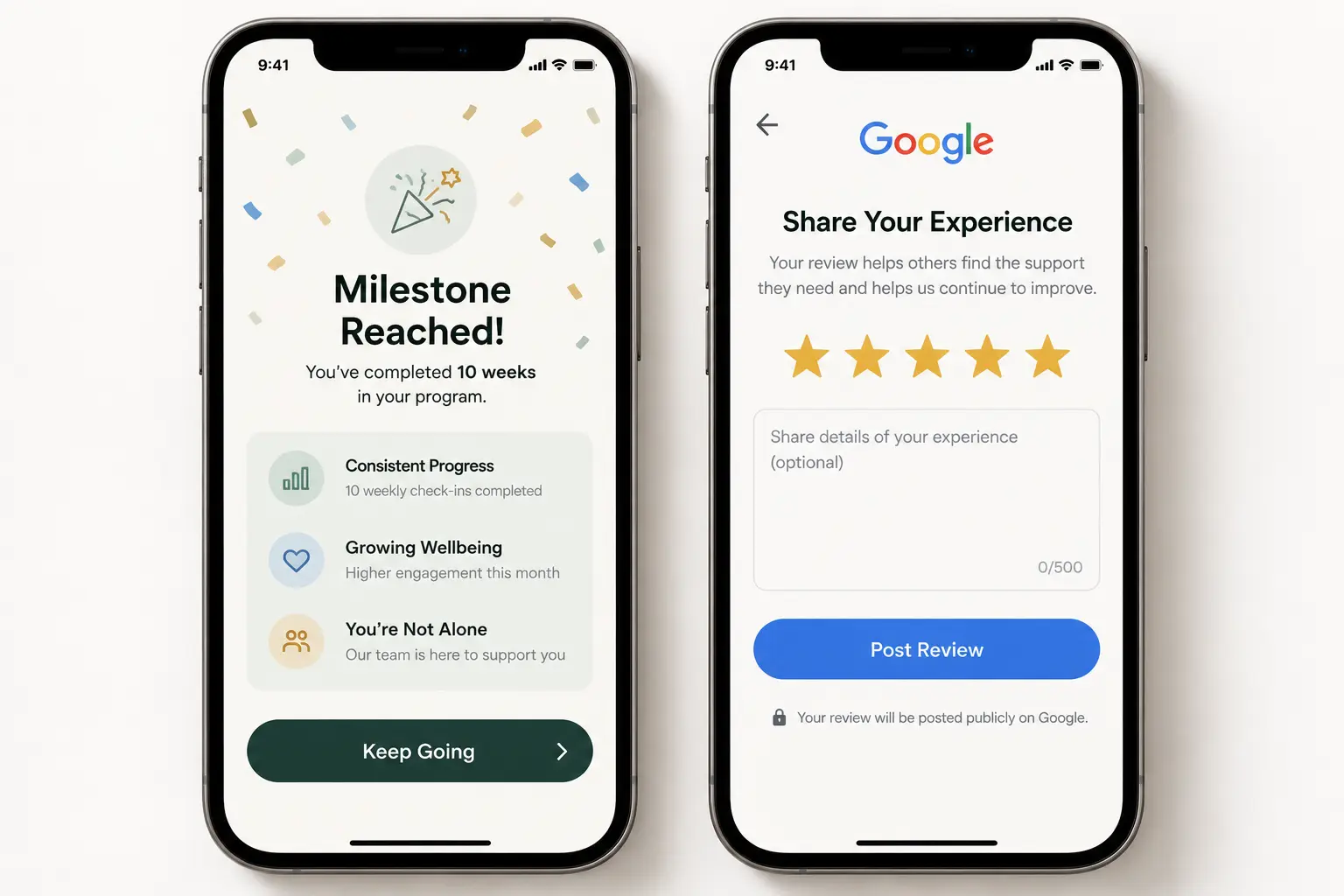
Inside the Team Recovery alumni app, milestone completions are tracked automatically. When an alumnus hits 30 days, 90 days, or one year, the platform can push a congratulatory notification followed by a review prompt. The sequencing matters: celebrate first, ask second. The request should feel like a natural extension of the milestone moment, not a separate transaction.
The app's gamified experience, which includes a leaderboard and milestone celebrations, puts alumni in a positive, engaged state at precisely these checkpoints. That emotional context is what produces detailed, authentic reviews rather than one-star or five-star ratings with no text.
Keep the Language Clean and Compliant
Your review request copy should never reference treatment, diagnoses, or program participation directly. It should simply ask alumni whether they'd be willing to share their experience with others who might be looking for support. Give them the direct Google review link. Tell them no specific details are required. Make it a 10-second action, not a 10-minute essay prompt.
Push notifications inside a HIPAA-compliant app are a better delivery channel than email or SMS for this purpose, because the communication stays inside a secured, consent-based environment the alumni actively opted into. The app's user tagging feature also lets you segment who receives the prompt, so you're not sending review requests to alumni who are in a vulnerable period or who have flagged clinical concerns in recent check-ins.
Use In-App Google Review Integration
The Team Recovery platform includes built-in Google Review collection capability. That means the link to your Google Business Profile can be embedded directly inside the app, reducing the friction between the ask and the action. The fewer steps between "I want to leave a review" and "review submitted," the higher your conversion rate on those requests.
If you're currently using a custom mobile app for behavioral health, this feature can be configured during your implementation phase or added to an existing build.
Timing the Ask: When Alumni Are Most Likely to Respond
Research on patient satisfaction surveys from the Agency for Healthcare Research and Quality shows that satisfaction is highest shortly after a positive experience and declines over time. The same principle applies to alumni reviews. The ask needs to happen when the experience is recent and the outcome feels real.
The three best windows for treatment center review requests are:
- 30-day milestone: Alumni are still closely connected to your program and staff. Gratitude is at its peak.
- 90-day milestone: Alumni have made it through the highest-risk relapse window. Confidence is high. They want to tell someone.
- One-year anniversary: Alumni are proud of what they've built. A review request feels like a celebration, not an obligation.
Avoid asking during the first two weeks post-discharge. Alumni are managing the stress of reintegration. A review request in that window reads as tone-deaf and is unlikely to produce a useful response.
Handling Negative Reviews Without Making It Worse
No center has a perfect review profile. Negative reviews will happen, and how you respond to them publicly matters as much as the review itself.
Respond to every negative review, even the unfair ones. Keep your response brief, professional, and empathetic. Acknowledge the concern without confirming or denying any details about a person's treatment, which would create a HIPAA exposure. A response like, "We take all feedback seriously and welcome the opportunity to discuss your experience directly. Please reach out to our team" is sufficient.
NIDA's principles of effective treatment reinforce that treatment quality, not marketing, is the foundation of long-term program success. A negative review that prompts internal quality review is more valuable than a suppressed complaint that festers into a staff retention problem.
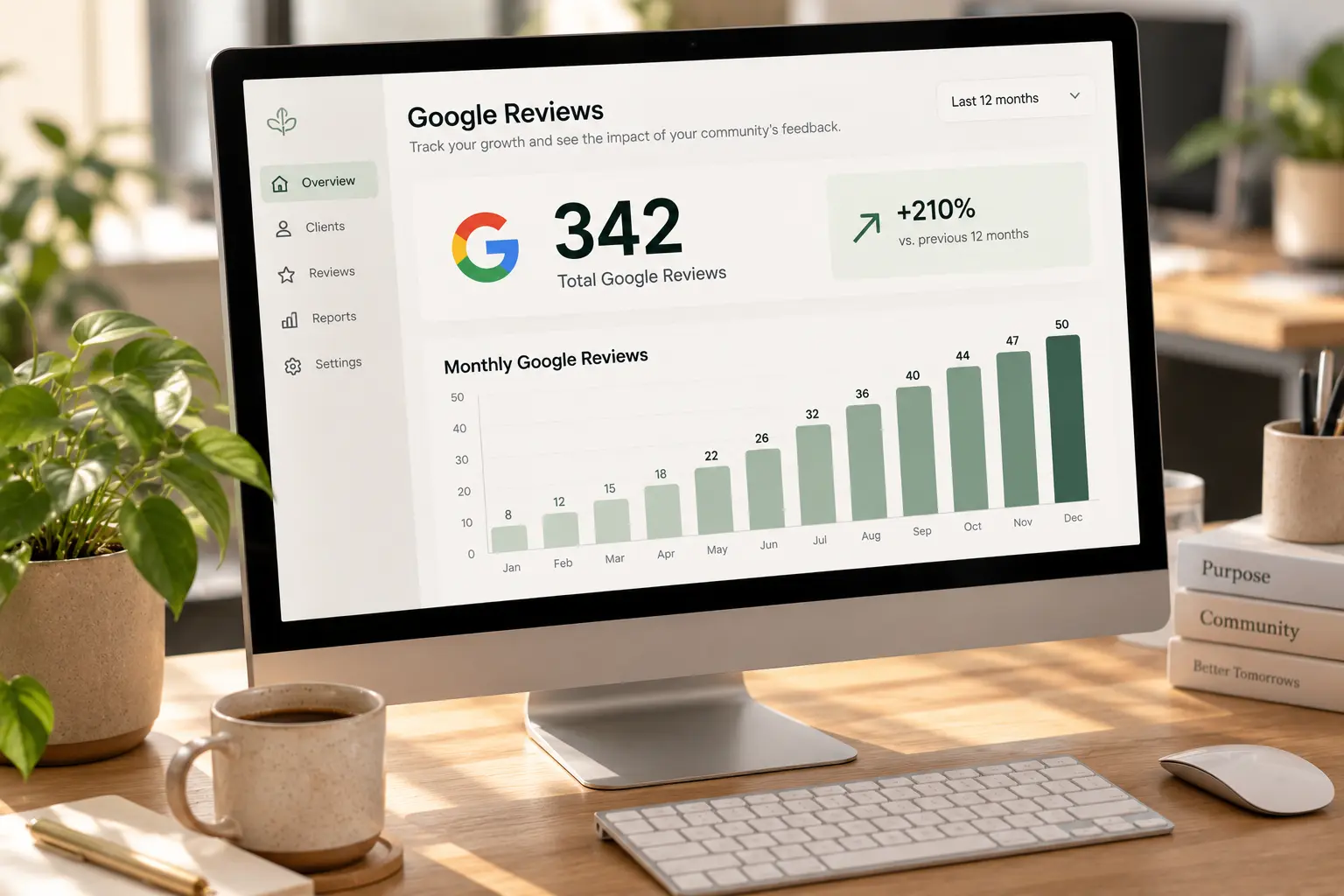
The volume strategy also works as a buffer. When you have 150+ reviews and a strong average rating, a handful of one-star outliers have minimal impact on your overall profile or your star rating.
Turning Review Collection Into a Referral Signal
Reviews and referrals operate on the same mechanism: a former client telling someone else that your program is worth choosing. When you increase Google reviews for your treatment center, you're not just improving search ranking. You're building a public record of alumni advocacy that drives admissions decisions.
This is why review collection belongs inside your alumni engagement strategy, not in a separate marketing workflow. See our case studies to understand how centers like Renaissance Ranch grew alumni referrals and readmissions from 15.4% to nearly 30% over two years. That growth didn't come from ad spend. It came from building an alumni community where former clients stayed connected, felt seen, and became natural advocates.
If you want to estimate what even a modest increase in alumni referrals would mean for your revenue, the Alumni Growth Calculator runs those numbers in under two minutes.
Reviews are a downstream outcome of alumni engagement done right. When alumni feel connected to your program and proud of their progress, they tell people. Sometimes they tell them on Google. Sometimes they send a referral call directly. Both outcomes are worth building for.
If you want to see how other centers have built this into their alumni programs, read our client reviews on Google and then book a Discovery Call with our team to see what it looks like inside the platform.
If you're ready to take the next step, Team Recovery is here to help. Contact us today to get started.

Henna Geronimo
Reviewer
Henna is a content strategist with over 5 years of experience. She specializes in creating informed, compassionate content for addiction treatment centers, using her deep understanding of the industry to educate, engage, and support individuals seeking recovery.
.webp)
.webp)