
.png)
The conversation about behavioral health software solutions has changed. It used to center on electronic records, billing systems, and scheduling tools. Those things still matter. But in 2026, the treatment centers setting themselves apart are asking a bigger question: what should our software actually do for the people we serve, at the moments they need it most?
The answer goes far beyond administrative efficiency. The best behavioral health platforms today function as a lifeline, a community hub, a clinical tool, and a recovery coach, all inside the app already on your alumni's phone.
Here’s what that looks like in practice, and why each feature matters more than you might think.
The SOS Button: One of the Most Vital Addiction Treatment Software Features
Relapse does not announce itself during business hours. It happens at night, on weekends, during holidays, in moments when the person in recovery feels completely alone. A well-designed SOS button gives your alumni a direct line to support at exactly those moments.
In a high-quality behavioral health software solution, the recovery support software SOS feature is not just a phone number. It is a configurable crisis response system that can include:
- One-tap connection to your program's crisis line or on-call counselor
- Automated alerts sent to a pre-selected support network
- Direct links to national crisis resources, including 988 Suicide and Crisis Lifeline
- In-app prompts that guide the user through a grounding or safety planning exercise
- Logging of crisis events so your clinical team can follow up appropriately
This is not a feature that generates revenue directly. But it is the feature that saves lives. And for programs that are serious about long-term outcomes, that is the most important ROI there is.
Geo-Location: Connecting Alumni to Support Wherever They Are
Recovery does not stop when an alumnus moves cities, travels for work, or finds themselves in an unfamiliar environment. Addiction treatment software features that include geo-location allow alumni to find support wherever they are, not just where they used to live.
A geo-location feature built into your alumni app can surface:
- Nearby AA, NA, and SMART Recovery meetings in real time
- Alumni events happening in the user's current geographic area
- Partner sober living homes or outpatient resources near their location
- Local crisis centers and detox facilities if a higher level of care is needed
For alumni who are traveling or who have relocated, knowing that support is available nearby is not just convenient. It is often the difference between staying connected to recovery and slipping into isolation.
Telehealth Integration: Closing the Gap Between Discharge and Ongoing Care
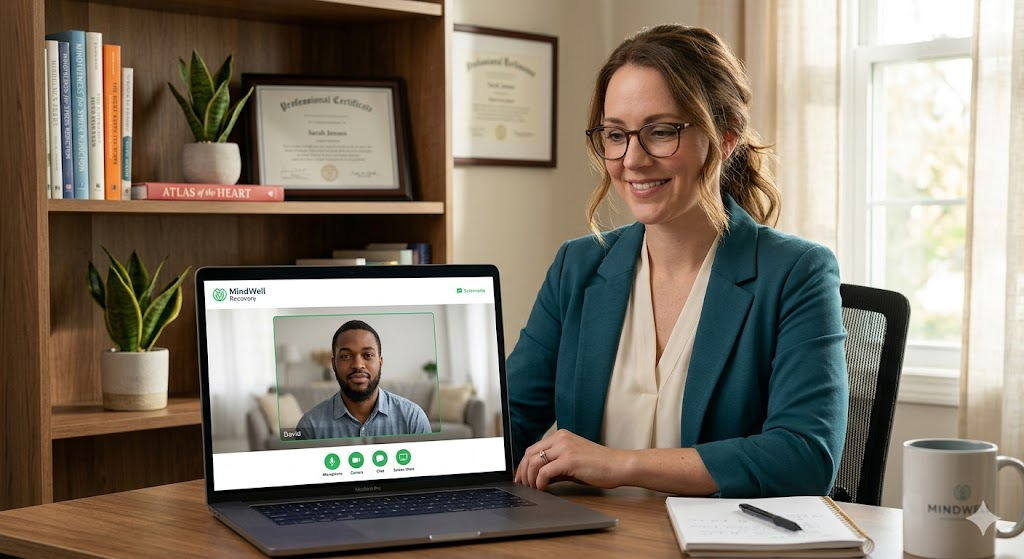
Telehealth became a standard of care during the pandemic and has proven its value in behavioral health ever since. Integrating telehealth directly into your alumni app removes every friction point that might keep an alumnus from attending a session.
Strong telehealth integration in behavioral health software solutions includes:
- Scheduled video sessions with counselors, case managers, or peer support specialists
- On-demand check-in calls for alumni flagged by your care team as at-risk
- Group telehealth sessions for alumni unable to attend in-person meetings
- Secure messaging between alumni and their assigned care coordinator
With telehealth integration behavioral health app, your alumni have easier access to features like check-ins, milestone tracking, and community engagement, the continuity of care becomes seamless. There is no separate login, no switching platforms, no friction.
HIPAA Compliance is a Non-Negotiable
Every feature described above involves sensitive personal health information. Crisis events, location data, telehealth sessions, and mood check-ins. All of it is protected health information under HIPAA, and all of it must be handled accordingly.
A HIPAA-compliant recovery app is not just a legal requirement. It is a clinical and ethical one. When evaluating any software for rehabs in 2026, ask these questions:
- Is the platform built on HIPAA-compliant infrastructure from the ground up?
- Are Business Associate Agreements (BAAs) provided as standard?
- How is data encrypted at rest and in transit?
- What happens to alumni data if the program ends its relationship with the vendor?
- Has the platform undergone third-party security audits?
At Team Recovery, HIPAA compliance is not a checkbox. It is a foundational part of how we deploy software for rehabs 2026.
Putting It All Together: One Platform, One Experience
The most important thing to understand about next-generation behavioral health software solutions is that these features work best when they are integrated. These include an SOS button, a geo-location tool, and a check-in system that flags at-risk alumni for a proactive telehealth outreach.
Fragmented tools create fragmented care. A single, unified platform creates the kind of seamless recovery experience that keeps alumni engaged, supported, and connected to your program long after discharge.
In this context, behavioral health software solutions should do more than manage records. It should show up for your alumni at the moments that matter most. Looking for a builder of a HIPAA compliant recovery app? Team Recovery is here to help you out. Book a demo now.

Henna Geronimo
Reviewer
Henna is a content strategist with over 5 years of experience. She specializes in creating informed, compassionate content for addiction treatment centers, using her deep understanding of the industry to educate, engage, and support individuals seeking recovery.
.png)

.webp)